
Scientific Steering Committee
June-Yi Lee
Chair of the conference theme "Earth System responses to net negative emissions and CDR"
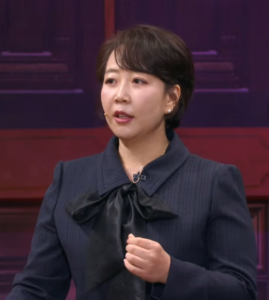
June-Yi Lee is a climate scientist specializing in Earth System modeling, prediction, and projection. She is a Professor of the Research Center for Climate Sciences and Department of Carbon Neutrality and Climate Change at Pusan National University. She is also a Project Leader for Earth System Predictability at the Institute for Basic Science Center for Climate Physics (ICCP). She has recently been focusing on understanding and predicting the interactions among climate, human health, and ecosystems in the near-term future. She has contributed to the Intergovernmental Panel on Climate Change (IPCC), serving as a Coordinating Lead Author for the Working Group I report in both the Sixth and Seventh Assessment Cycles.
Kristie L. Ebi
Chair of the conference theme "Health implications of overshoot pathways"

Kristie L. Ebi, has been conducting research and practice on the health risks of climate variability and change for 30 years, focusing on estimating current and future health risks of climate change; designing adaptation policies and measures to reduce risks in multi-stressor environments; and estimating the health co-benefits of mitigation policies. She has supported multiple countries in Central America, Europe, Africa, Asia, and the Pacific in assessing their vulnerabilities and implementing and evaluating adaptation policies and programs. She co-chairs ICONICS.
Xianchun Tan
Chair of the conference theme "Governance and equity of overshoot pathway"
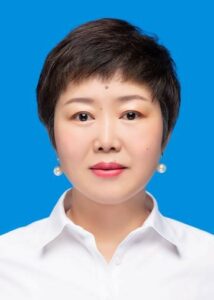
Xianchun Tan is Deputy Director of the Center for Carbon Neutrality Strategy at the Institutes of Science and Development, Chinese Academy of Sciences, and a doctoral supervisor. A former visiting scholar at the Harvard Kennedy School, she serves as a Lead Author for the Intergovernmental Panel on Climate Change Sixth Assessment Report and contributes to the Seventh Assessment Report process. Her research focuses on climate governance, carbon neutrality strategies, and green development policies, particularly in support of China’s “dual carbon” goals. Professor Tan has published more than 100 academic papers, co-authored over 10 books, and her policy recommendations have informed national climate policy and low-carbon transition efforts in China.
Joeri Rogelj
Chair of the conference theme "Highest possible mitigation ambition under overshoot"

Joeri Rogelj is a climate scientist and professor specializing in climate change mitigation, carbon budgets, and sustainable development pathways. He is a Professor of Climate Science & Policy at Imperial College London and serves as Director of Research at the Grantham Institute for Climate Change and the Environment. His work has contributed to international climate assessments, including reports for the Intergovernmental Panel on Climate Change (IPCC). Rogelj’s research focuses on limiting global warming to 1.5°C, net-zero emissions strategies, and the scientific foundations of international climate policy.
Jonathan Donges
Chair of the conference theme "Overshoot pathway legacy, tipping dynamics and other abrupt changes"

Jonathan Donges is Deputy Lead of the Earth Resilience Science Unit (ERSU) at the Potsdam Institute for Climate Impact Research. He leads ERSU’s research theme on integrated human-Earth system modelling and Earth resilience analysis. He interacts closely with PIK’s Earth System Analysis (RD1) and Complexity Science Departments (RD4) in the scope of PIK’s Earth System Science collaboration and the COPAN collaboration. His research work focusses on dynamics of planetary-scale socio-ecological systems, climatic and social tipping elements, their dynamics and interactions, decarbonization dynamics and sustainability transformation, conceptual models of society-environment coevolutionary dynamics, structure and dynamics of complex networks, nonlinear dynamics and time series analysis, and application of these methods to climate physics and Earth system analysis
Dabo Guan
Chair of the conference theme "Technological solutions for decarbonization and negative emissions"
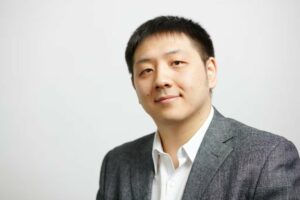
Dabo Guan is a joint Distinguished Chair of Climate Change and Low Carbon Transition at Tsinghua University China and University College London, UK, and the Deputy Director of Tsinghua Institute for Carbon Neutrality. He specialises in developing emission inventories and global supply chain models to advance understanding of the mutual feedbacks between human activities and climate change. He serves as the Chief Scientist in coordinating China-EU Flagship Cooperation Programme on Climate Change and Biodiversity. He’s recently elected to Member of Academia Europaea and Fellow of American Geophysical Union.
Debra Roberts
Chair of the conference theme "Climate impact (ir)reversibility"
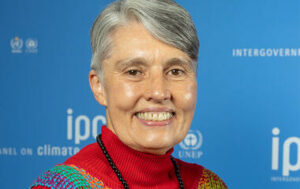
Debra Roberts is an internationally recognized expert in urban sustainability and climate change adaptation. She holds a Ph.D. in Urban Biogeography and has played a leading role in integrating environmental planning into local government structures. She was instrumental in establishing the Environmental Planning and Climate Protection Department and later led Sustainable and Resilient City Initiatives, including serving as Chief Resilience Officer. Roberts has contributed extensively to the Intergovernmental Panel on Climate Change (IPCC), including serving as a lead author for the Fifth Assessment Report and as Co-Chair of Working Group II during the Sixth Assessment Cycle. She is also a part-time professor at the University of Twente and a Honorary Professor at the University of KwaZulu-Natal. Her work has been recognized with several awards, and she was named one of the 100 most influential people in climate policy by Apolitical in 2019 and 2022/23.
Sindra Sharma
Chair of the conference theme "Adaptation & adaptation limits, and loss & damage under climate overshoot"
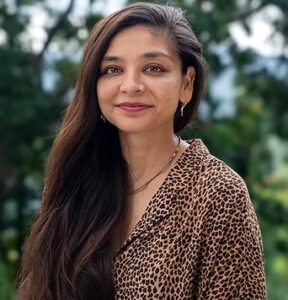
Sindra Sharma-Khushal is a policy advisor and researcher focused on climate change adaptation and sustainable development, particularly in Small Island Developing States. She holds a Ph.D. from the London School of Economics, with research on microfinance and climate resilience. She has worked with organizations like E3G and the Pacific Islands Climate Action Network, supporting climate justice and sustainable cooling strategies. Her work bridges policy, environmental psychology, and complex adaptive systems.
Organising Committee

Carl Schleussner
Carl Schleussner is a climate scientist and Head of the Integrated Climate Impacts (ICI) Research Group at IIASA. He is also a Science Advisor at Climate Analytics and Honorary Professor at Humboldt University in Berlin. His work focuses on climate extremes, tipping points, and the societal implications of climate change. Schleussner has contributed to the IPCC and UN climate negotiations, advocating for the 1.5°C goal and climate justice, particularly for vulnerable regions.

Inga Menke
Inga Menke is a stakeholder engagement expert and Senior Research Scholar at IIASA. She specializes in climate policy, science-policy dialogue, and participatory processes, with a focus on vulnerable regions. She holds degrees in Political Science, Geography, and Disaster Management from the Universities of Marburg and Bonn. reviously, she was Deputy Head of the Climate Science team at Climate Analytics, where she led initiatives on climate litigation, loss and damage, and science-policy dialogues.

Lydia Gericke
Lydia Gericke is a Project Officer in the Energy, Climate, and Environment Program at the International Institute for Applied Systems Analysis (IIASA). Passionate about fostering international collaboration, she works to connect diverse perspectives in addressing global climate challenges. Prior to joining IIASA, she developed a climate protection strategy for the Berlin district of Friedrichshain-Kreuzberg, concentrating on sustainable urban development. Lydia holds a background in forestry.
Local Organising Committee
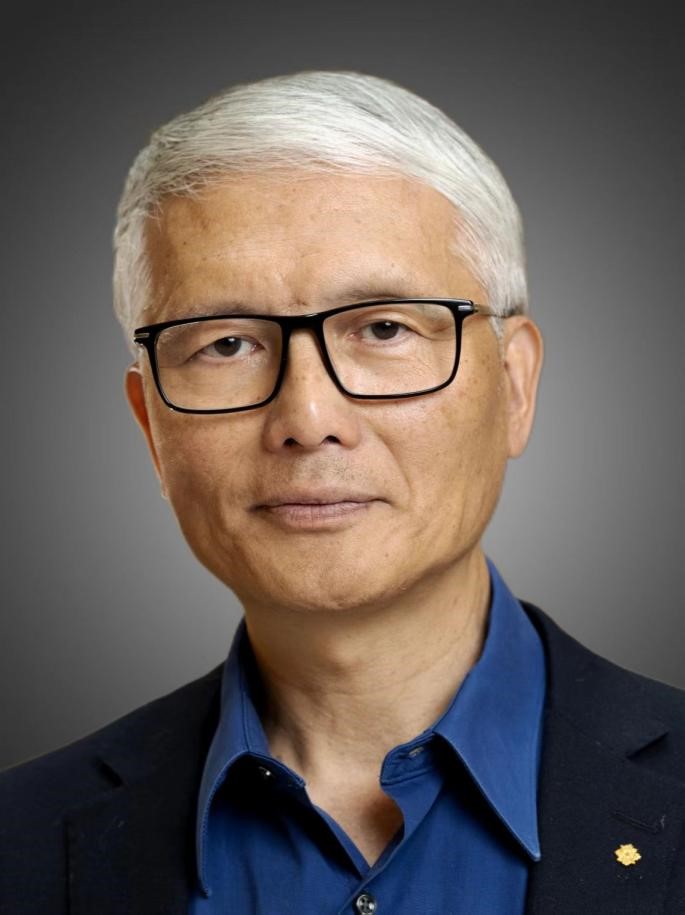
Deliang Chen
Deliang Chen is an internationally renowned climate scientist, Xinghua Distinguished Chair Professor, and Head of the Department of Earth System Science at Tsinghua University. An elected member or fellow of seven academies and societies, he researches climate dynamics and global environmental change, with a particular focus on the Tibetan Plateau. He has served as a Coordinating Lead Author for the IPCC, held senior leadership roles in international scientific organizations, and published more than 700 scientific papers.
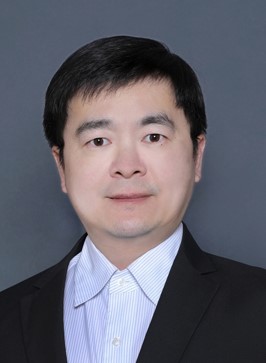
Qiuhong Tang
Qiuhong Tang is Professor in the Department of Earth System Science at Tsinghua University and a leading hydrologist specializing in global change and water resources. His research focuses on hydrological modelling, monitoring and forecasting, remote sensing, and water-related environmental risks. Before joining Tsinghua University in 2026, he was a Professor at the Chinese Academy of Sciences. He is a recipient of the National Science Fund for Distinguished Young Scholars and a Royal Society Newton Advanced Fellowship.

Ruiqi Yu
Ruiqi Yu is a Project Officer in Professor Deliang Chen’s research group at Tsinghua University and an experienced project management professional. She supports academic and international climate-change projects, specializing in project planning, coordination, stakeholder engagement, and implementation. Her work connects researchers, institutions, and diverse stakeholders to strengthen interdisciplinary exchange and international collaboration. She holds a bachelor’s degree in Meteorology and a Master of Business Administration.